

In today’s digital age, as a customer service professional—whether freelancing or assisting clients virtually—mastering the art of omnichannel communication is essential.
Customers now expect seamless and consistent interactions across multiple platforms, from email and social media to live chat and phone calls.
Managing these channels effectively can be challenging, but fear not!
Here are five practical strategies to help you excel in handling customer interactions across these various channels.

What is Omnichannel Communication?
Omni-channel communication involves providing a consistent and integrated customer service experience across multiple platforms and devices.
This includes live chat, social media, email, and phone support.
Each channel has its unique characteristics and best practices, and the challenge is to integrate these channels smoothly to ensure a unified customer experience.
Common Challenges (Do these sound familiar?):
- Handling multiple channels at once: Ever felt overwhelmed trying to manage live chat, social media, and emails all at the same time? You’re not alone—it can be challenging to keep up with everything simultaneously.
- Maintaining consistency: Customers expect the same high-quality service no matter how they contact you. Ensuring consistency across all channels can be tough but is crucial.
- Smooth transitions between channels: Sometimes, a customer might start a conversation on Twitter, then switch to email, and finally call you. Making these transitions seamless is essential for a smooth customer experience.
- Tracking customer interactions: With so many platforms to manage, keeping track of every customer interaction can be difficult. However, it’s vital to ensure that no customer is forgotten.
Have you faced these challenges? You’re in the right place!
Let’s dive into five practical strategies that will help you improve your omnichannel communication and provide even better customer service.

1. Maintain a consistent Brand Voice
To provide a seamless customer experience, establish and follow a clear tone and style guide that aligns with your brand.
Key Tips:
- Define a Consistent Voice and Tone: Keep your brand voice uniform across all channels, including language, tone, and style.
- Use Standard Greetings and Sign-offs: Apply consistent greetings and sign-offs to create a professional and familiar experience.
- Ensure Uniform Profile Information: Maintain the same profile details (name, photo, title) across platforms for recognition and trust.
What You Can Do:
- Maintain Consistency: Keep your brand voice uniform across all channels by following your company’s style guide and using the appropriate tone and language. For example, use casual phrases if the brand is friendly.
- Create a Personal Cheat Sheet: List key phrases and responses that align with the brand voice, such as “Thanks a bunch!” for a playful tone.
- Practice Translating Scenarios: Regularly practice adapting common scenarios to fit your brand voice for each channel; for example, handle a complaint empathetically in emails with detailed explanations, and briefly acknowledge it with a positive tone on social media.
- Align with Core Values: Ensure your communications reflect the brand’s core values, such as transparency, especially in challenging situations; for instance, openly explain the cause of a delay and the steps being taken to resolve it to maintain trust.
| By following these guidelines, you ensure a cohesive customer experience and reinforce your brand’s reputation. |

2. Master Channel-Specific Skills
Each platform has unique features and best practices. Develop skills tailored to each communication channel.
Key Tips:
- Writing: Focus on clarity, conciseness, and proper grammar for emails, chats, and social media.
- Verbal: Improve phone skills with attention to tone, pacing, and active listening.
- Visual: Master video call etiquette and non-verbal communication.
- Social Media: Learn platform-specific nuances, such as character limits and emoji usage.
What You Can Do:
- Emails: Use formal language and clear structure; for example, “Dear [Customer’s Name], Thank you for reaching out. We apologize for any inconvenience and are addressing your issue.”
- Chats and Social Media: Utilize grammar tools like Grammarly and keep messages concise and friendly.
- Phone Skills: Practice with colleagues or record your calls to improve tone and pacing, ensuring a calm and supportive approach.
- Video Calls: Maintain eye contact, use suitable backgrounds, and dress professionally; interpret non-verbal cues like nodding to enhance understanding.
- Twitter: Keep responses within 280 characters and use hashtags; for example, “Hi [Customer’s Name]! Thanks for your message. We’re looking into it. #CustomerSupport”
- Facebook: Adopt a conversational tone and use emojis thoughtfully; for example, “Hello [Customer’s Name]! 😊 Sorry to hear about that. Let’s sort this out together.”
| By refining these channel-specific skills, you’ll improve communication across different platforms and enhance the customer experience. |
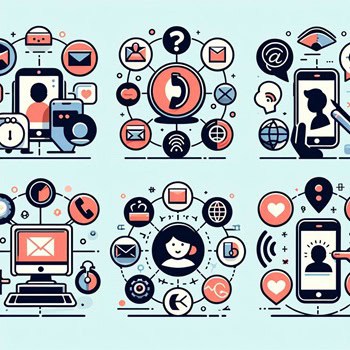
3. Implement Efficient Note-Taking Systems
A centralized and accessible note-taking system is essential for tracking interactions across channels.
Key Tips:
- Consistency: Use standardized templates for different types of interactions to maintain uniformity.
- Speed: Adopt abbreviations to streamline note-taking.
- Reference: Ensure all relevant details are easily accessible for future use.
What You Can Do:n
- Use Centralized Tools: Leverage tools like Salesforce or HubSpot that offer centralized note-taking and tracking features, allowing you to maintain a comprehensive conversation history across channels.
- Develop Templates: Create specific templates, such as one for customer complaints, to ensure all necessary information, like the issue, resolution steps, and follow-up actions, is consistently recorded.
- Utilize Abbreviations: Use common abbreviations like “CS” for customer, “Res” for resolution, and “FU” for follow-up to make note-taking faster and more efficient.
- Document Essential Details: Always record key details, including customer names, contact information, interaction dates, and main discussion points, to ensure easy access for future reference.
| By implementing an efficient note-taking system, you can ensure that all customer interactions are tracked and accessible, leading to better follow-up, improved customer satisfaction, and a more organized workflow. |

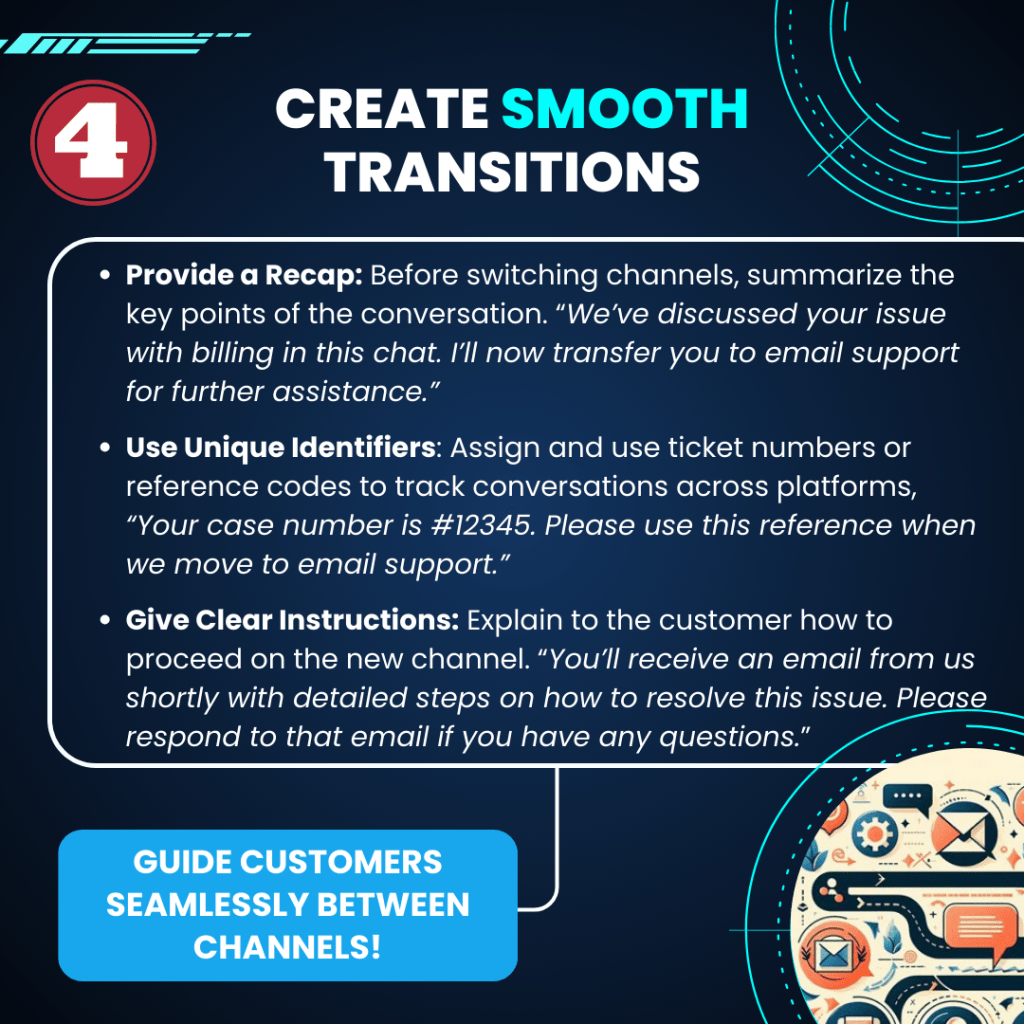
4. Perfect the Art of Smooth Transitions
When moving conversations between channels, provide a recap and clear instructions for continuing the interaction.
Key Tips:
- Recap the Interaction: Ensure both parties understand the key points and actions taken.
- Use Unique Identifiers: Implement tracking codes to follow the conversation across platforms.
- Provide Clear Instructions: Guide the customer on how to proceed and specify required actions.
What You Can Do:
- Summarize: Before transitioning, recap the conversation details clearly, such as “I will send you a detailed email response to address your concerns.”
- Assign Tracking Codes: Use reference numbers for continuity, like “Your reference number is #12345; include this in future communications.”
- Explain Next Steps: Clearly instruct the customer on what to do next, e.g., “Look for an email from us with further details, and reply if you have additional questions.”
| By mastering these transitions, you ensure a smooth and supportive customer experience. |

5. Personalize Interactions
Leverage CRM data to tailor your interactions based on customer preferences and past interactions.
Key Tips:
- Analyze Data: Understand preferred communication channels and habits.
- Engage on Preferred Platforms: Communicate through the customer’s preferred channels.
- Use Past Interaction History: Reference previous interactions to offer personalized service.
What You Can Do:
- Review CRM Data: Examine customer profiles to understand their communication preferences. If a customer frequently responds to SMS, note this in their profile to send them updates via SMS rather than email.
- Adapt Communication Timing: Use insights from past interactions to time your communications effectively. For instance, if a customer usually calls during lunchtime, try to reach them at that time.
- Leverage Historical Context: Use past interactions to personalize current communications. If a customer has previously mentioned they will be traveling and provided an alternative email address, use that email address for updates during their travel period.
| By personalizing interactions, you enhance customer satisfaction and loyalty by aligning with their preferences and needs. |

Conclusion
Mastering omnichannel communication as a customer service professional involves developing skills and strategies that prioritize the customer’s experience across all platforms.
By implementing them, you’ll be better equipped to deliver exceptional service, no matter how your customers choose to reach out.
Embrace these practices to create a seamless, cohesive, and highly satisfying customer experience that builds loyalty and trust. Your efforts will ensure that every customer interaction is meaningful and effective!

Prefer a visual? Explore the key points in this Slideshow presentation:



Ready to delegate? Explore the unique value I add to your business!
Click here to learn more about my services and how I can bring a holistic approach to your work.
 Cath Assist Service